
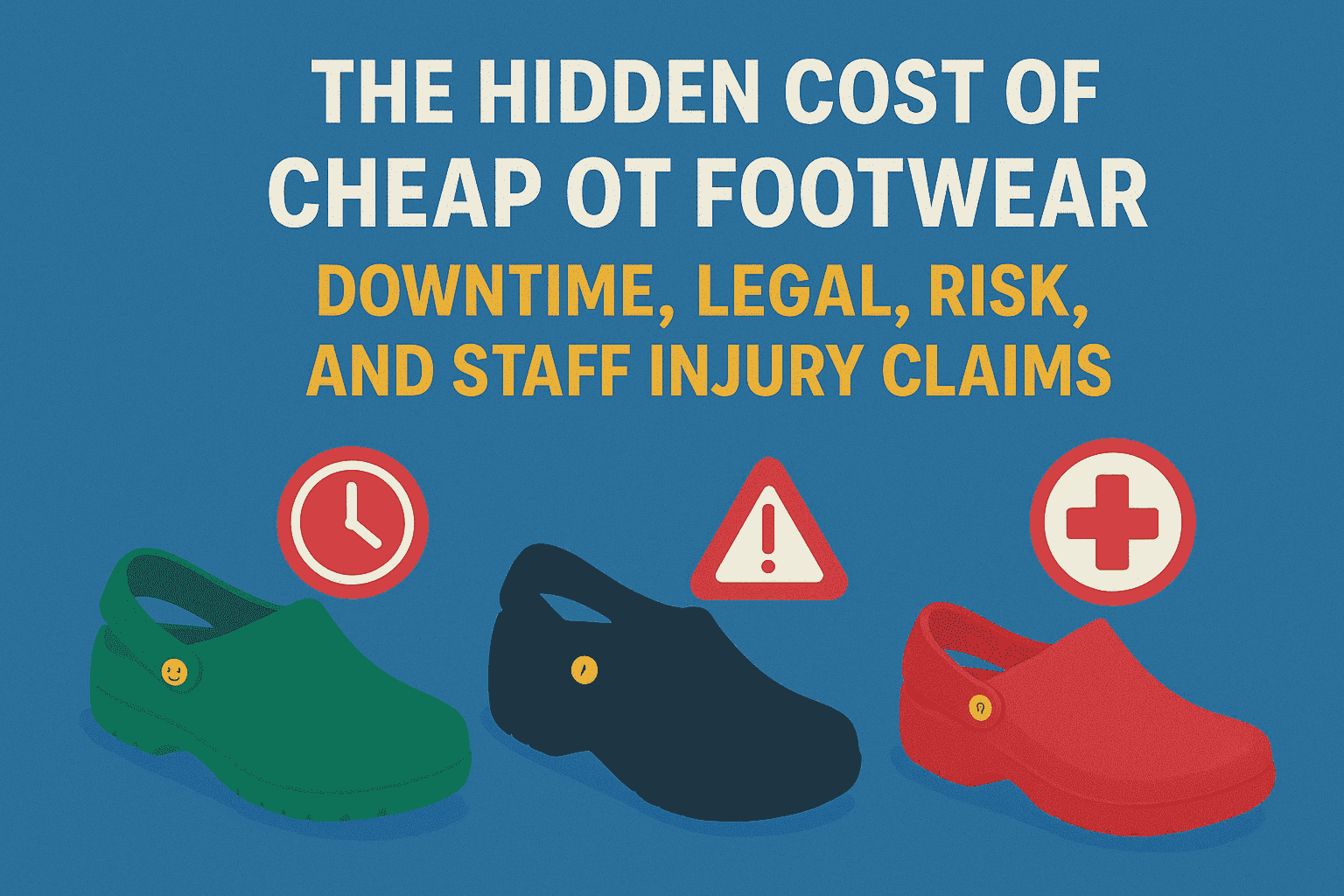
Hospitals and clinics in Qatar face a crucial decision when buying footwear for their operating theatre (OT) staff and medical teams. The right medical staff footwear supports long hours, protects staff from injury, and helps meet strict health and safety standards.
Buying cheap OT surgical clogs might look like a way to save money at first. But it often leads to bigger problems — from staff injuries to costly downtime and legal risks. This blog covers everything healthcare buyers need to know before making their purchase.
What Are OT Surgical Clogs and Why Are They Important?
OT surgical clogs are specialized footwear designed specifically for medical professionals working in operating rooms, intensive care units, and other high-demand clinical settings. These clogs are not ordinary shoes; they are engineered to meet the specific needs of healthcare workers who spend long hours on their feet in high-pressure environments.
To perform effectively and safely, OT surgical clogs must meet several critical criteria:
- Comfortable for long shifts (8+ hours)
- Slip-resistant on wet or slick surfaces
- Easy to clean and sanitize to prevent infections
- Durable to last in demanding environments
Because hospital staff spend most of their time on their feet, proper footwear is essential for their health and safety.
What Problems Do Cheap Medical Footwear Cause?
Hospitals that opt for low-cost, inferior-quality OT footwear may initially benefit from budget savings, but these savings are often short-lived. In practice, poorly made footwear introduces a cascade of operational challenges and hidden costs:
Foot and Leg Pain Leading to Reduced Productivity
Budget footwear frequently lacks adequate arch support, cushioning, and shock absorption. Over time, staff may experience pain in the feet, ankles, knees, and lower back. Conditions such as plantar fasciitis, heel spurs, or tendonitis can develop, leading to:
- Increased medical leave
- Decreased performance during shifts
- Higher risk of long-term musculoskeletal disorders
Higher Risk of Slips, Trips, and Falls
Operating theatres and hospital corridors are high-risk areas for slips due to the presence of bodily fluids, disinfectants, and other substances. Low-quality clogs often fail to meet industry-standard slip-resistance criteria. A single fall can result in:
- Serious injury to a healthcare worker
- Legal liability for the hospital
- Expensive compensation claims
- Disrupted surgical schedules and patient care
Hygiene and Infection Control Issues
Inadequate footwear materials can absorb moisture or deteriorate after cleaning, making them breeding grounds for bacteria. This compromises the hospital’s infection control protocols, increasing the risk of:
- Cross-contamination
- Post-operative infections
- Non-compliance during health inspections
Legal and Regulatory Non-Compliance
The Ministry of Public Health (MoPH) in Qatar has clear guidelines regarding healthcare worker safety, which include footwear standards. Use of non-compliant footwear can result in:
- Fines or penalties
- Loss of accreditation
- Increased scrutiny from auditors or regulators
- Exposure to liability in the event of staff injury
Higher Staff Turnover and Low Morale
Healthcare workers who are provided with uncomfortable or unsafe footwear often feel undervalued. This leads to dissatisfaction, poor morale, and higher attrition rates, resulting in:
- Increased hiring and onboarding costs
- Reduced continuity and team cohesion
- Greater HR burden in maintaining staffing levels
What Features Should Buyers Look for in Medical Staff Footwear?
To make an informed and strategic purchasing decision, healthcare procurement professionals should evaluate footwear based on the following essential features:
- Certified slip-resistant soles: Proven grip performance on wet and dry surfaces.
- Ergonomic support: Anatomically shaped insole and arch support to reduce foot fatigue.
- Durable, lightweight materials: Footwear that is both tough and comfortable for long-term use.
- Disinfectant-friendly surfaces: Shoes made from materials that can withstand hospital-grade cleaning without damage.
- Proper ventilation: Breathability to prevent moisture build-up and skin irritation.
- Regulatory compliance: Certification that meets Qatar’s MoPH and international healthcare safety standards.
How Does Investing in Quality Footwear Save Money?
While premium OT surgical clogs come with a higher initial price, they deliver significantly better value over time. Here’s how investing in quality pays off:
- Reduced sick leave and fewer injury claims: Ergonomic footwear leads to better staff health and fewer absences.
- Improved operational efficiency: Comfortable staff are more focused, productive, and quicker on their feet.
- Minimized legal and compliance costs: Using certified footwear helps avoid fines, lawsuits, and insurance complications.
- Lower staff turnover: Better equipment contributes to a more positive work environment and stronger employee retention.
In short, high-quality OT footwear is not an expense—it’s a smart investment in operational resilience and employee well-being.
Why Choose Light Speed Trading Company for Medical Footwear in Qatar?
With over 25 years of experience supplying medical products to Qatar’s healthcare industry, Light Speed Trading Company understands the unique demands of operating theatres and clinical settings. Here’s why hospitals and clinics across the country trust us:
- Proven Track Record: Trusted by leading hospitals and medical institutions in Qatar.
- Certified and Compliant: All products meet MoPH standards and international healthcare regulations.
- Ergonomic Designs: Footwear engineered specifically for long shifts and surgical environments.
- Durable Quality, Competitive Pricing: Long-lasting products with a strong cost-benefit ratio.
- Custom Solutions for Healthcare Facilities: Bulk ordering, personalized quotes, and ongoing product support.
Frequently Asked Questions (FAQs)
Can cheap OT surgical clogs lead to long-term health issues for staff?
Yes. Prolonged use of non-supportive footwear can cause chronic conditions such as plantar fasciitis, joint pain, and other musculoskeletal disorders.
How often should medical professionals replace their OT footwear?
Footwear should ideally be replaced every 6 to 12 months, depending on usage intensity and visible wear. Regular replacement helps maintain hygiene and safety.
Are your medical footwear products compliant with Qatar’s regulations?
Absolutely. All our footwear meets or exceeds the Ministry of Public Health’s safety and compliance requirements, along with international certification standards.
Final Thoughts
The apparent savings from buying cheap OT surgical clogs often come at a steep cost. From staff injuries and legal liabilities to reduced efficiency and high turnover, poor-quality footwear can have serious consequences for any healthcare facility.
Hospitals in Qatar must prioritize quality, compliance, and staff welfare when selecting medical footwear. By partnering with a trusted supplier like Light Speed Trading Company, healthcare institutions can ensure that their teams are protected, supported, and empowered to provide exceptional care.
Choose safety. Choose comfort. Choose compliance. Choose Light Speed Trading Company.



Write a comment
Your email address will not be published. All fields are required